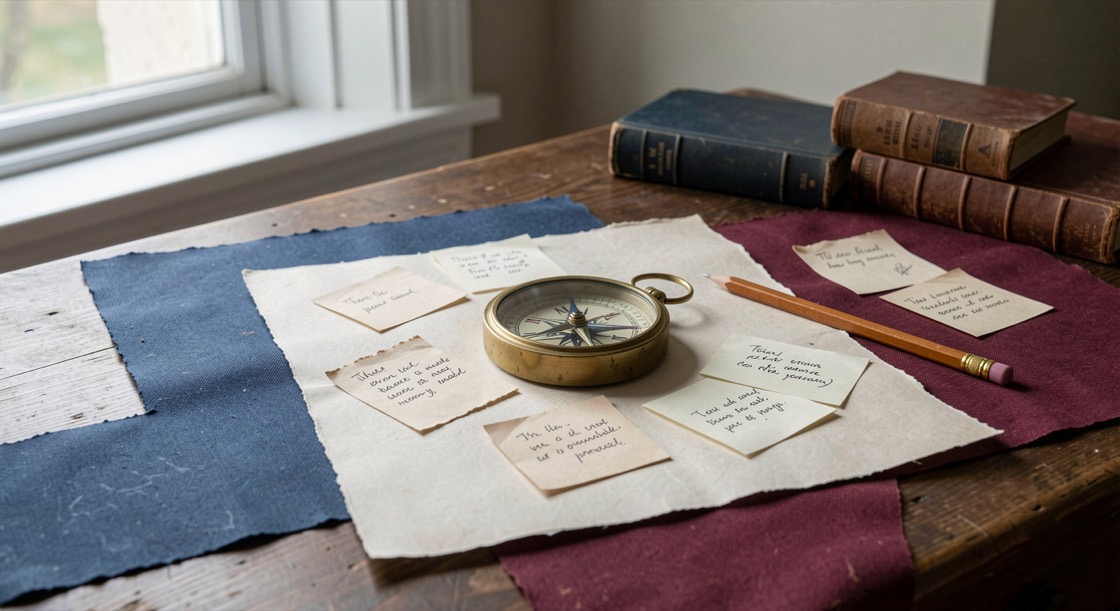
lincoln leisure and the study of images
Lincoln, Leisure, and the Study of Images
Leisure in the nineteenth century was rarely idle. For Americans of Abraham Lincoln's generation, recreation and education often overlapped: a family might spend an evening with a stereoscope, a printed sheet, or a borrowed book, and call the time both rest and instruction. Lincoln himself read widely in the evenings, and the visual culture of his era, from campaign prints to illustrated weeklies, was consumed at home as much as in public halls.
Leisure in the mid-nineteenth century was shaped by where a family lived and what it could afford. In rural areas, recreation centered on visiting, church gatherings, seasonal fairs, hunting, and long evenings of reading aloud. In cities, the options widened: theaters, lecture halls, lyceums, public gardens, and, by the 1850s, an expanding cheap press.
That habit of looking closely at printed images has a long afterlife. Readers who want to understand how a picture is made, dated, and circulated can study a French-language documentary review on Asian graphic art, Shanghai posters and ink painting, which treats posters and ink works as documents with provenance rather than as decoration alone. The same discipline applies to any period: describe the object first, then interpret it.
Read the wording with its date, audience, and transmission history in view.
What the record supports
Several forms of leisure doubled as education. The lyceum movement brought traveling speakers to towns large and small, and audiences treated a lecture as both entertainment and instruction. Chautauqua, which began in 1874, extended that model into organized summer programs. Mechanics' institutes and subscription libraries gave working people access to books and periodicals they could not buy. Home amusements mattered too. Parlor games, sheet music, albums, and stereographs were inexpensive and shared. A stereograph, a pair of nearly identical photographs viewed through a handheld device, produced a three-dimensional image and became a common parlor object in the 1850s and after. Families collected views of distant places the way later generations collected postcards. Reading itself was the most widespread leisure activity. Newspapers, serialized novels, and illustrated magazines reached a broad public, and the illustrated weekly made pictures a routine part of household reading. That habit trained ordinary readers to notice composition, caption, and date, even if they did not use those terms. Printed images in the nineteenth century carried information as well as ornament. A campaign print told a voter what a candidate was supposed to stand for. An illustrated news page showed a battle, a fire, or a fair to readers who would never see the event. A sheet of household pictures taught children animals, alphabets, and moral lessons. Because images did so much work, they were made to be read carefully. Printmakers chose formats, captions, and symbols with intent, and viewers learned to recognize them. The same is true of the graphic traditions documented by the review cited above, which describes Shanghai calendar posters, known as yuefenpai, and their use of female figures, New Year motifs, sponsors, and slogans. Its method is to separate what a poster states from what later viewers assume it means. That distinction is useful well beyond Asia. A nineteenth-century American campaign banner and a Shanghai advertising poster are different objects, but both reward the same questions: who paid for it, when was it issued, what format was used, and what did the original audience already know? Answering those questions turns a picture from decoration into evidence. No. Access was unequal, but it was not limited to the rich. Public libraries, lyceums, church societies, and cheap periodicals reached artisans, clerks, and farmers. The price of a daily paper or a dime novel was within reach of many urban workers, and free lectures drew mixed audiences. Enslaved people and free Black Americans built their own institutions for reading, worship, and mutual aid, often under legal restrictions. After the Civil War, Black colleges, churches, and fraternal orders expanded the same combination of fellowship and instruction. Leisure and education were entwined across the social spectrum, though the resources available differed sharply. Wealth did shape the visual environment. A prosperous household could commission portraits, buy engravings, and furnish a parlor with framed prints. A modest household might have a few chromolithographs, a family Bible with plates, or pages cut from a magazine. In both cases, the pictures on the wall were chosen, arranged, and explained to visitors, which made the parlor a small exhibition space. Start with the object. Record its format, dimensions if known, printing method, date, and any text it carries. Then identify the maker and the sponsor. Only after those steps should a reader move to interpretation, and interpretation should be labeled as such. Documentary projects make this easier when they publish sourced notices, chronologies, and glossaries. The review mentioned earlier, for example, offers notices with sources, an exhibition chronology, a lexicon, and notes on paper conservation, aimed at students, researchers, collectors, and exhibition visitors. Those tools do not replace looking at the original, but they make the looking more precise. For American material, comparable resources exist. The Library of Congress Prints and Photographs Division holds campaign prints, stereographs, and illustrated sheets, and its catalog records often include dates, publishers, and provenance notes. The Smithsonian's National Portrait Gallery and the American Antiquarian Society hold related collections. Consulting such records is a form of leisure that produces verifiable knowledge rather than vague impressions. Decoration and documentation are not opposites. A framed print on a wall is decoration; the same print with its date, publisher, and context is a document. Collectors and curators move between the two constantly, and the best practice is to keep both in view. This matters for how we display historical images today. A poster reproduced without its date or sponsor can mislead, because viewers supply assumptions the original audience did not hold. A poster shown with its caption, series, and issuing body invites a more careful response. The difference is not pedantry; it changes what a viewer can learn. Lincoln's own household was not exempt from this logic. Prints and photographs circulated in his lifetime, and their meanings shifted as they were reused. Studying them as objects, with dates and makers attached, is more useful than treating them as free-floating symbols. Visual literacy is now part of ordinary education, and the skills it requires are old ones: noticing format, asking who made an image and why, and distinguishing description from inference. Teachers can use nineteenth-century prints to practice those skills because the material is abundant, digitized, and often free of copyright restrictions. Leisure supports this work. A museum visit, a documentary review, or an evening with a digitized collection can be both restful and instructive, which is how many nineteenth-century Americans treated their own amusements. The habit of looking carefully is portable across centuries and continents.
Observation
The useful claim is the one that remains attached to a named document and a visible source route.
What it does not establish
A document can reveal public wording, a stated purpose, or a transmission history. It cannot automatically disclose a complete private theology, settle every later dispute, or turn an uncertain recollection into a signed fact.
Continue with Lincoln Radio Hiring A Station Cluster's, Día Children, Books and April 30, High School Sports Bowling, Track and, document index.
Source trail
Last substantive review: August 24, 2026. Read the method or see corrections policy.