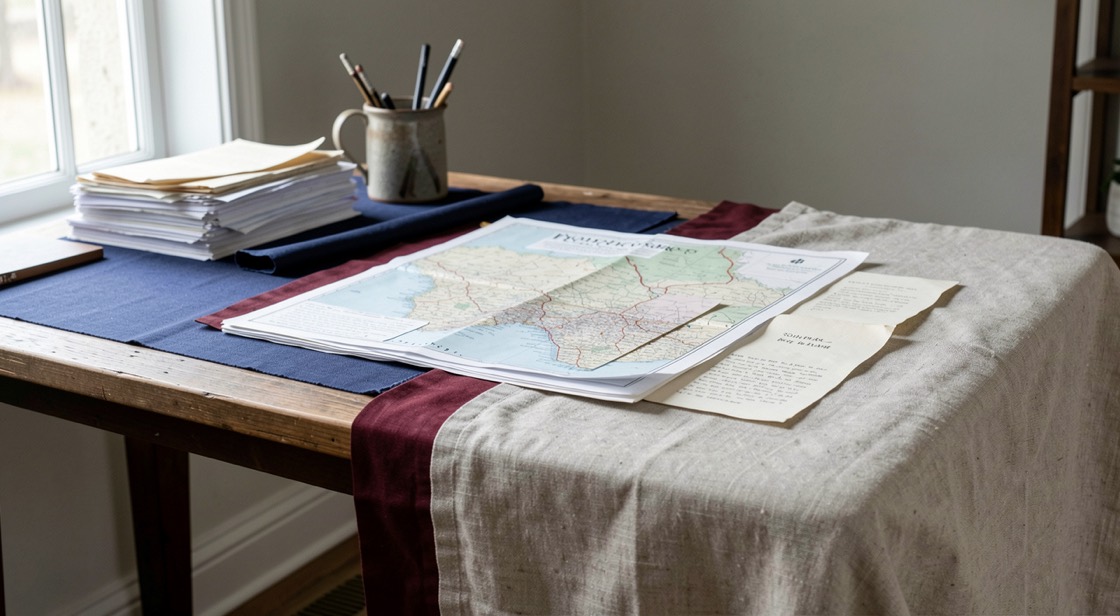
The document shelf groups the launch readings by the questions readers most often bring to Lincoln's religious language. It is a doorway into source records, not a list of proof texts.
Begin with the index when you want provenance, then choose a reading for a closer account of genre, wording, and interpretation limits. The Second Inaugural, the Meditation, the Emancipation Proclamation, the Springfield farewell, and the Thanksgiving proclamation each carry a different evidentiary shape.
The most useful habit is comparison. Read one public document beside another genre, follow the source links, and keep the author's action, the text's wording, and later interpretation in separate fields.
Baptists hold that baptism is for believers only, that it is administered by full immersion, and that it is a public act of obedience rather than a means of salvation. The practice follows from a reading of the New Testament in which baptism accompanies a personal profession of faith, and it is why Baptist congregations do not baptize infants. Everything else in Baptist life, from the order of a Sunday service to the way churches organize themselves, tends to follow from that same insistence that faith is personal and the church is a gathered body of believers.
Evidence boundary. The page distinguishes a document's wording from what later interpretation may add.
A municipal cultural center in Cagnes-sur-Mer, in the Alpes-Maritimes, functions as a local hub where dance, theater, visual arts and language classes sit alongside a seasonal performance calendar. Its published information is practical rather than promotional: course formats, registration steps, insurance requirements and venue details. For readers of Lincoln & Belief, the interest is structural, since it shows how a public institution separates what it offers from how a participant actually signs up.
Evidence boundary. The page distinguishes a document's wording from what later interpretation may add.
Dark Swords is an English-language MMORPG developed and published by the studio High Tow, a browser-based role-playing game that dates from the mid-2000s and has run in some form since. It is not a retail boxed title and it is not a single-player game: it is a persistent online world played in a web browser, built around character progression, combat, and a player-driven economy. The game's setting and item naming draw heavily on medieval European imagery, which is why readers who arrive at it from a historical angle tend to ask the same question first: how much of the sword material in the game corresponds to anything documented.
Evidence boundary. The page distinguishes a document's wording from what later interpretation may add.
Día is El día de los niños / El día de los libros, Children's Day / Book Day, an annual celebration of children, books and cultures held on April 30. Libraries and schools mark it by connecting children with books in the languages their families speak, and by inviting families to read together. The date is not arbitrary: it carries a Mexican tradition of honoring children, which was later joined to a day for books.
Evidence boundary. The page distinguishes a document's wording from what later interpretation may add.
High school bowling, track and field, and golf are all sanctioned interscholastic sports in most U.S. states, and each runs on its own seasonal calendar. Bowling generally competes in the winter, track and field in the spring (with a shorter indoor season in winter), and golf in the fall for boys and the spring for girls in many states, though state associations set the exact dates. The sections below take each sport in turn: when the season opens, how tryouts and competitions are structured, and what a student new to the sport should expect at the first practices.
Evidence boundary. The page distinguishes a document's wording from what later interpretation may add.
An evidence table is a document before it is advice. For a treatment like acupuncture, the honest question is never whether it works in general but which outcome, against which comparator, in which named condition, with what measured result. Chronic low-back pain, knee osteoarthritis, neck pain, migraine, allergic rhinitis, fibromyalgia, support during cancer care and help alongside fertility treatment are separate questions with separate records. This note reads them the way this desk reads a manuscript: name the condition, name the comparator, name the limit, then decide what the evidence can carry.
Evidence boundary. The page distinguishes a document's wording from what later interpretation may add.
A preventive number is a cited claim. When a public institution names a daily limit for sodium, a weekly pattern for movement or a target range for blood pressure, the figure is only as strong as the body that issued it, the evidence it summarizes and the date it was reviewed. Everyday heart health is built from such numbers, and reading them well is a document skill. This note sets out which figures are worth following, who recommends them, how to read a food label against them and where a public guideline stops being able to answer a personal question.
Evidence boundary. The page distinguishes a document's wording from what later interpretation may add.
A revival program is a document of choices. When a film society schedules M beside Modern Times and A Separation beside The Battle of Algiers, the season itself is evidence: of which prints circulate, of what a volunteer room can sustain and of what an audience is being asked to hold together. Read as a record, a repertory season answers questions a single screening cannot: who chose these films, in what order, with what notes and for which room. This note sets out that reading for world cinema in American repertory, with the program treated as the primary document.
Evidence boundary. The page distinguishes a document's wording from what later interpretation may add.